By Sumin Maharjan, 7th April 2026
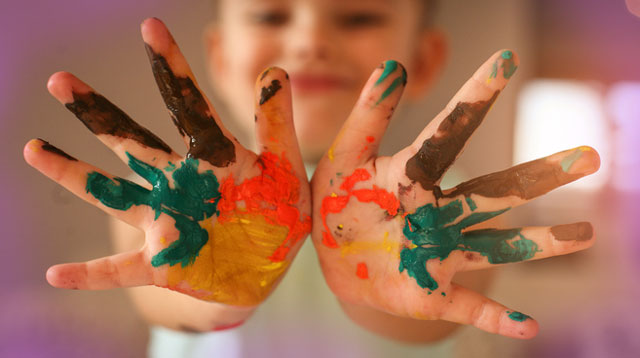
I. Introduction: The Many Voices of a Single Child
The Reggio Emilia approach represents a fundamental shift in how society perceives the intellectual and emotional life of the young child. At its core, this philosophy suggests that every child is born not as a blank slate to be written upon, but as a "capable protagonist" already equipped with a complex "chorus" of internal voices (Biermeier, 2022). This internal symphony is characterized by a rich tapestry of rhythm, texture, silence, and surprise. From their earliest moments, children do not merely absorb information; they actively speak through sculpture, through questions, through movement, and through metaphor. They communicate with their eyes, their hands, their drawings, and their play, utilizing what Loris Malaguzzi famously termed the "hundred languages of children." This perspective identifies the child as an active researcher of their own life, possessing an innate agency to construct their own theories about how the world functions (The Education Hub, 2020).
However, the tragedy of many modern educational settings is the tendency to reduce this diverse symphony to a single, compliant voice. Traditional systems often demand "one right answer" and enforce rigid, uniform ways to write, sit, and learn, effectively silencing the very curiosity that education is meant to nurture. The Reggio Emilia approach stands as a radical refusal of this reductionist view. Instead of delivering learning as a finished product, it protects and amplifies the child’s many languages, helping them grow richer and more complex. In this vision, expression is not a secondary "bonus" to the curriculum; it is the essential path through which understanding is built. This philosophy matters profoundly today because it honors the unfolding stories of children, ensuring that their many voices are recognized as the foundation of their education (Early Childhood Ireland, 2024).
II. What Are the Hundred Languages of Children?
The phrase "hundred languages" is far more than a poetic metaphor; it is a radical declaration of a child’s right to multiple forms of intelligence. When Malaguzzi composed his seminal work on this subject, he was performing an act of defense for childhood itself, naming the many forms of communication that a standardized society often overlooks or actively steals away (Al-Ababneh, 2020). These languages are the multi-sensory tools through which children explore, interpret, and ultimately express their relationship with their environment. While conventional education often prioritizes verbal and logical-mathematical skills, the Reggio approach acknowledges that a child’s "speech" includes drawing, dancing, storytelling, sculpting, and imagining. It even encompasses the subtle languages of pausing to observe, the tactile experience of touching a rough surface, or the resilience shown in the process of failing and trying again (KLA Schools, 2024).
Cognitive science and the Reggio philosophy align in the understanding that children are inherently multi-sensory thinkers. They process information by doing, feeling, and seeing across multiple dimensions simultaneously. When an educational system limits a child’s available languages, it inadvertently limits their ability to comprehend complex concepts and diminishes their confidence in their own unique voice. Reggio-inspired environments seek to reverse this trend by preserving and expanding these languages, honoring the profound ways children learn before they ever encounter a formal lesson. By recognizing the hundred languages, educators see the "whole child," valuing not just what they can repeat in words, but what they can dream and construct through their unique expressive powers (Goodwin University, 2024).
• III. How the Reggio Emilia Approach Makes the Hundred Visible
The Reggio Emilia approach does not view the "hundred languages" as something to be "taught" in the traditional sense; rather, it creates an ecosystem designed to reveal them. This pedagogical structure rests upon the "Image of the Child"—a foundational belief that sees the child as strong, capable, and full of potential. This shift in perspective transforms the teacher's role from a lecturer to a "co-researcher" who wonders alongside the child (Biermeier, 2022). Knowledge is not constructed in isolation but through a complex web of relationships with materials, peers, and adults. In a Reggio school, a toddler stacking blocks is not merely passing time; she is a researcher investigating the principles of balance and gravity. This "research" is made visible through documentation—photographs, transcripts, and sketches that capture the evolution of thought, allowing the learning process to become a shared community narrative (The Education Hub, 2020).
Furthermore, the physical environment is famously referred to as the "third teacher," serving as a silent partner in the educational process. Every corner of a Reggio-inspired classroom is an intentional invitation to dialogue and curiosity. By providing open-ended materials—such as translucent fabrics, mirrors, clay, light tables, and natural elements—the school encourages children to move freely and choose the medium that best helps them explore a specific theory. In such a space, the goal is not to reach a pre-determined answer on a worksheet, but to follow a question as it deepens through the child's curiosity. This environment fosters a culture of "listening" where the child’s ideas are treated with the same intellectual respect as those of an adult (Inspirations Nurseries, 2023).
IV. The Role of the Atelier and the Atelierista
A defining feature of the Reggio experience is the atelier, a dedicated studio space defined by light, texture, and infinite possibility. The atelier is not a place where children go for a scheduled "art class" to produce identical crafts; it is a laboratory for thinking. In this space, children explore the specific languages of paint, shadow, wire, and sound to investigate their theories and feelings. The atelierista, a trained artist who works in collaboration with classroom teachers, serves as a guide in this laboratory. Their role is to offer "provocations"—questions or materials that challenge the child to think more deeply, such as asking how a cardboard structure might "speak" or how light might change the shape of a sculpture (Inspirations Nurseries, 2023).
Through these provocations, materials move beyond being simple tools and become languages in their own right. Whether a child is using charcoal to draw the "sound" of thunder or using translucent paper to recreate the movement of wind, the atelier acts as a mirror to the child's internal thoughts. This creative work is woven into the very rhythm of the curriculum rather than being treated as an extracurricular activity. While traditional education often views art as mere decoration, the Reggio approach elevates it to a form of genuine research and discovery, ensuring that the child’s expressive journey is never confined (Biermeier, 2022).
V. How Teachers and Parents Support the Hundred Languages
While children are born with the "hundred languages," these voices require active, empathetic listeners to flourish. The Reggio teacher facilitates this by abandoning the role of the "holder of answers" to become a careful observer and documentarian. By recording what a child is trying to say—through photos of their constructions or transcripts of their group dialogues—the teacher provides a platform for the child's ideas to be expanded rather than corrected. These observations are shared with the community not as an assessment of "right or wrong," but as a prompt for collective reflection and further inquiry (Early Childhood Ireland, 2024).
Parents are integral to this ecosystem, viewed as "co-constructors of knowledge" rather than just passive observers of their child's schooling. Their cultural insights and family traditions enrich the learning environment, often serving as the starting point for deep classroom projects. This home-school dialogue ensures that the "hundred languages" are celebrated across the child's entire world. In this collaborative model, both teachers and parents act as "translators" who help the child's unique voice be heard clearly, fostering a sense of belonging and intellectual validation that follows the child throughout their life (The Education Hub, 2020).
VI. Why the Hundred Languages Matter Today
In an era increasingly characterized by speed, conformity, and the pressure of standardized assessment, the hundred languages of children serve as a powerful form of resistance. Too often, children are forced to adapt to rigid systems that require them to quiet their natural curiosity for the sake of compliance. When education reduces human potential to test scores, it risks losing the very essence of the child. The Reggio Emilia approach reminds us that preserving these languages is, fundamentally, about preserving the complexity of our humanity. Modern classrooms that embrace these languages allow for a form of differentiated learning that respects the emotional and cognitive needs of every individual (Al-Ababneh, 2020).
Furthermore, this philosophy naturally equips children with essential 21st-century skills—creativity, collaboration, and critical thinking—not through isolated lessons, but through the organic process of shared meaning-making. As we face global challenges that require unprecedented levels of empathy and innovation, we need individuals who are "multi-lingual in expression" and capable of imagining new solutions. By honoring the hundred languages, we prepare children to be not just students, but active, engaged citizens capable of navigating and shaping a complex world (KLA Schools, 2024).
VII. Bringing the Hundred Languages Home or to Any School
The principles of Reggio Emilia can be integrated into any setting through intentional, small changes that prioritize the child's voice. At home, parents can offer "invitations to play" rather than structured activities—providing open-ended materials like clay, loose parts, or fabric and observing the child's process without interruption. By asking open-ended questions and celebrating the journey of learning over the final product, families create a space where the "hundred" can thrive. In traditional classrooms, teachers can shift the focus from delivering information to active listening, using documentation to show children that their thoughts are valued. When we trust the child’s expressive potential, we begin to hear them in all forms—not just in words, but in rhythm, color, and silence (Goodwin University, 2024).
VIII. Conclusion: The Hundred Is There
The hundred languages of children are not merely a poetic ideal; they are a profound reality that lives in the hum of a classroom and the curve of a brushstroke. In the Reggio Emilia approach, these languages are amplified and celebrated for the sake of meaning rather than performance. When we slow down enough to let a child’s ideas lead, we are not just educating; we are participating in something sacred. This vision reminds us that education is about revelation rather than containment. The "hundred" is always present; it is simply a matter of whether we, as adults, choose to listen. By opening our doors wider and placing the clay beside the pencil, we ensure that the child's symphony continues to play (Early Childhood Ireland, 2024).
References
Al-Ababneh, M. M. (2020). The Reggio Emilia approach: A review of the literature. International Journal of Child Care and Education Policy, 14(1), 1-15.
Biermeier, M. A. (2022). Inspired by Reggio Emilia: Emergent curriculum in relationship-driven learning environments. National Association for the Education of Young Children (NAEYC).
Early Childhood Ireland. (2024). The Reggio Emilia approach.
Goodwin University. (2024). The hundred languages of children: What they are & how they inform Reggio Emilia learning.
Inspirations Nurseries & Forest Schools. (2023). The role of an atelierista.
KLA Schools. (2024). 10 benefits of Reggio Emilia preschool: Why they are perfect for hands-on learners.
The Education Hub. (2020). The Reggio Emilia approach.
Comments
Post a Comment